written by Maika Dieterich
1 Abstract
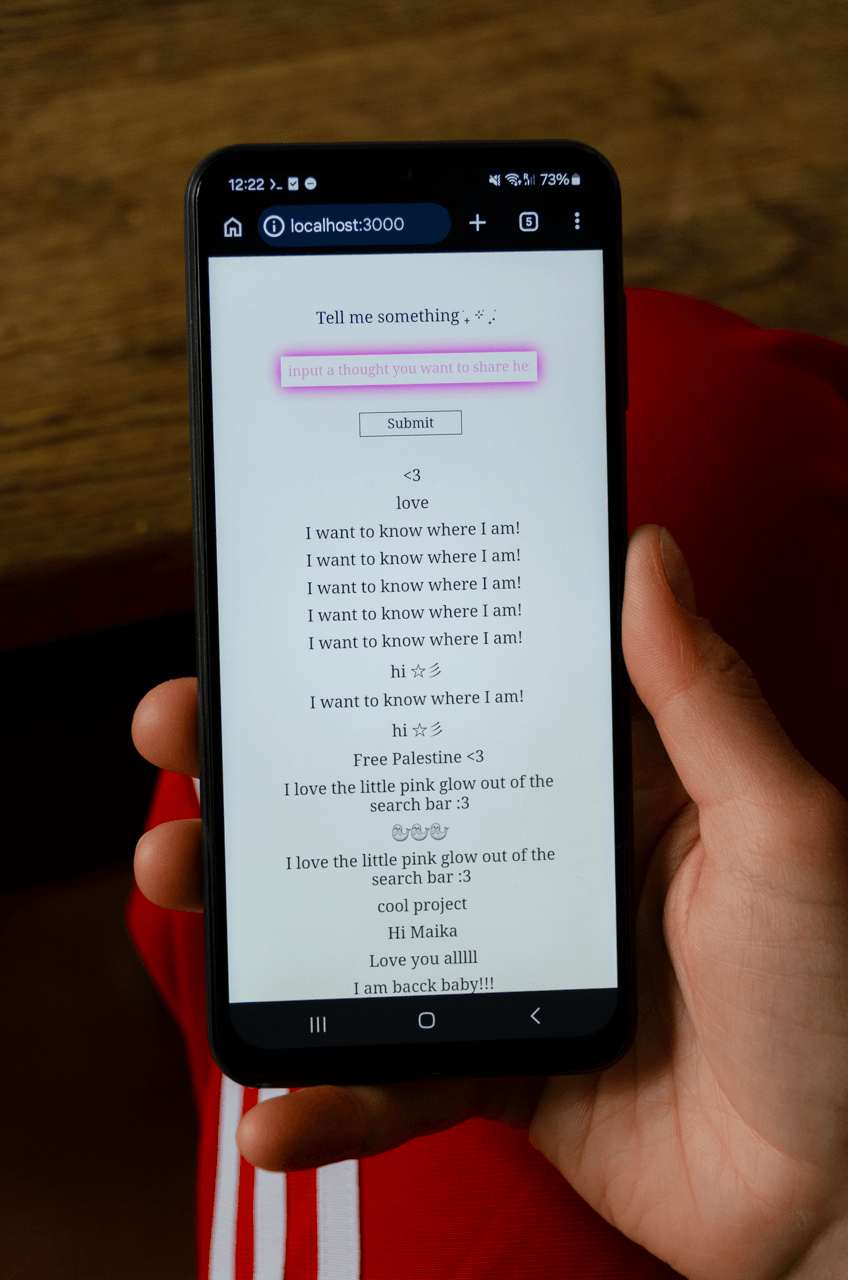
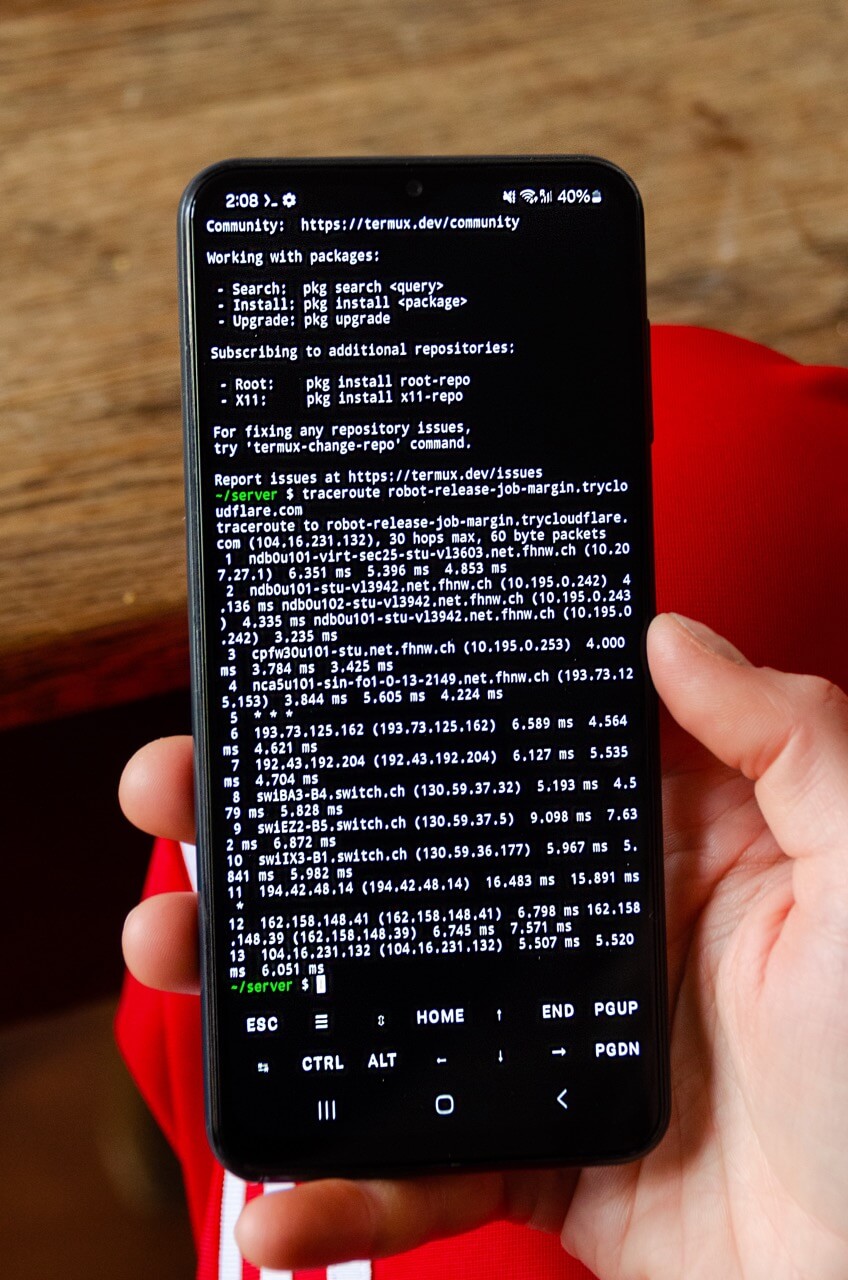
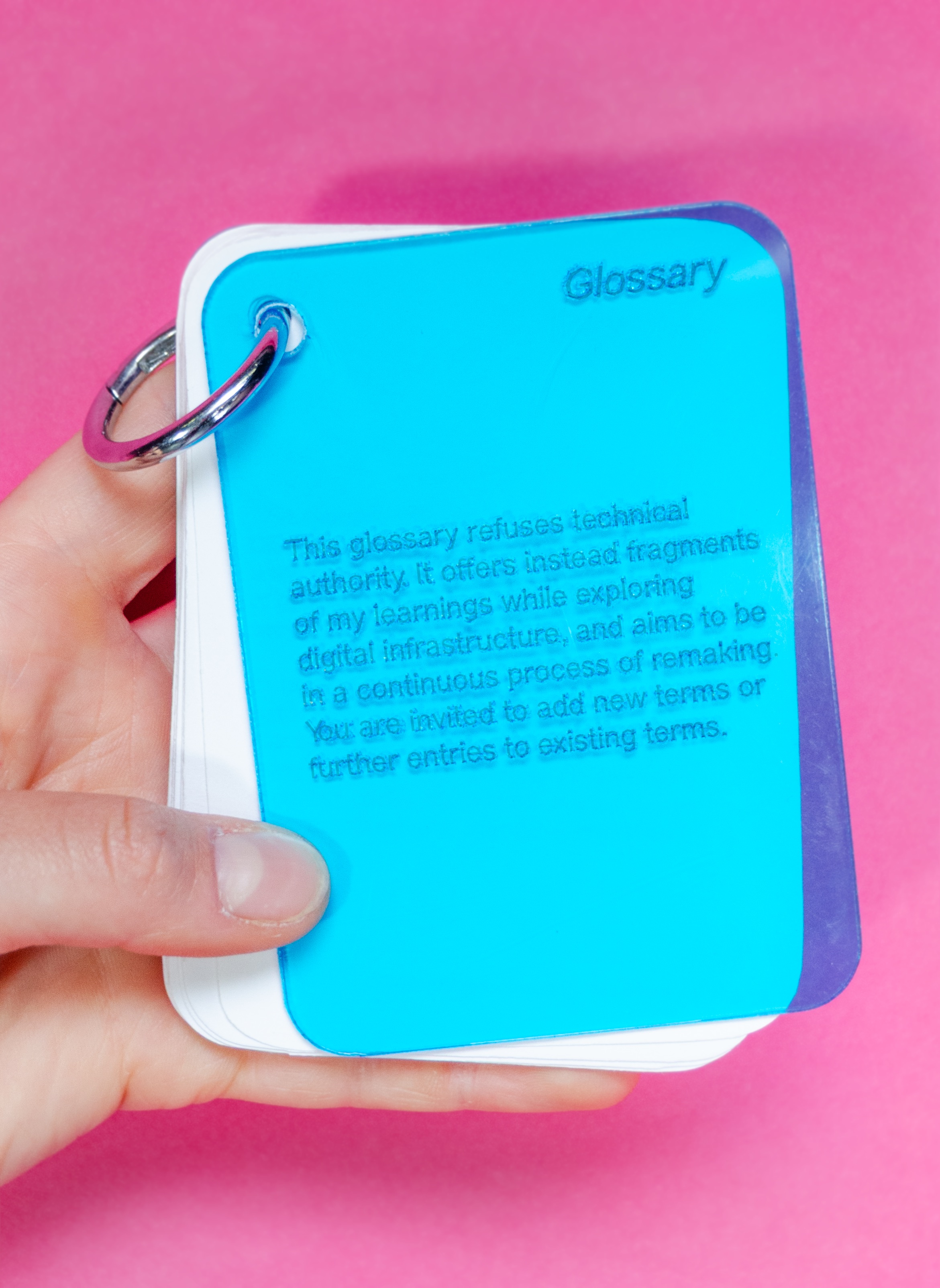
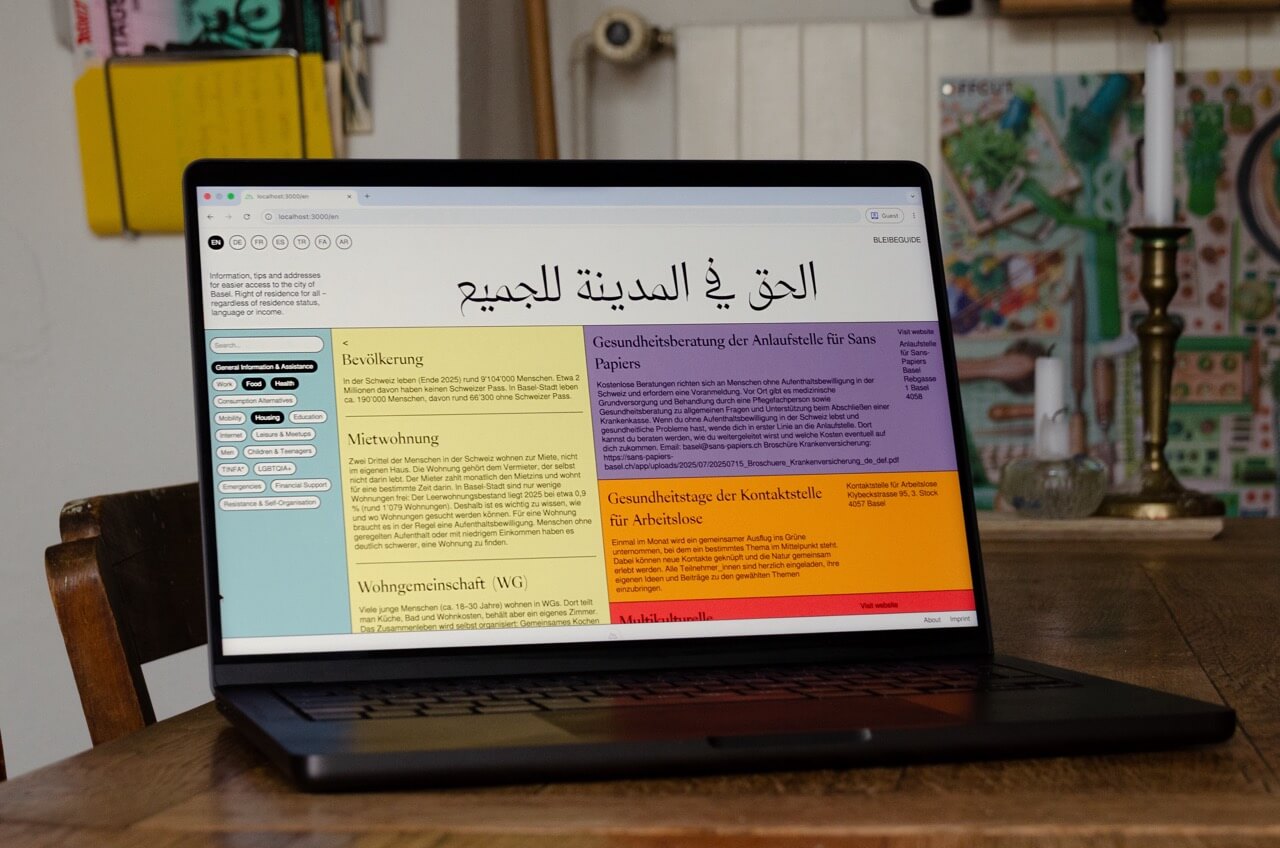
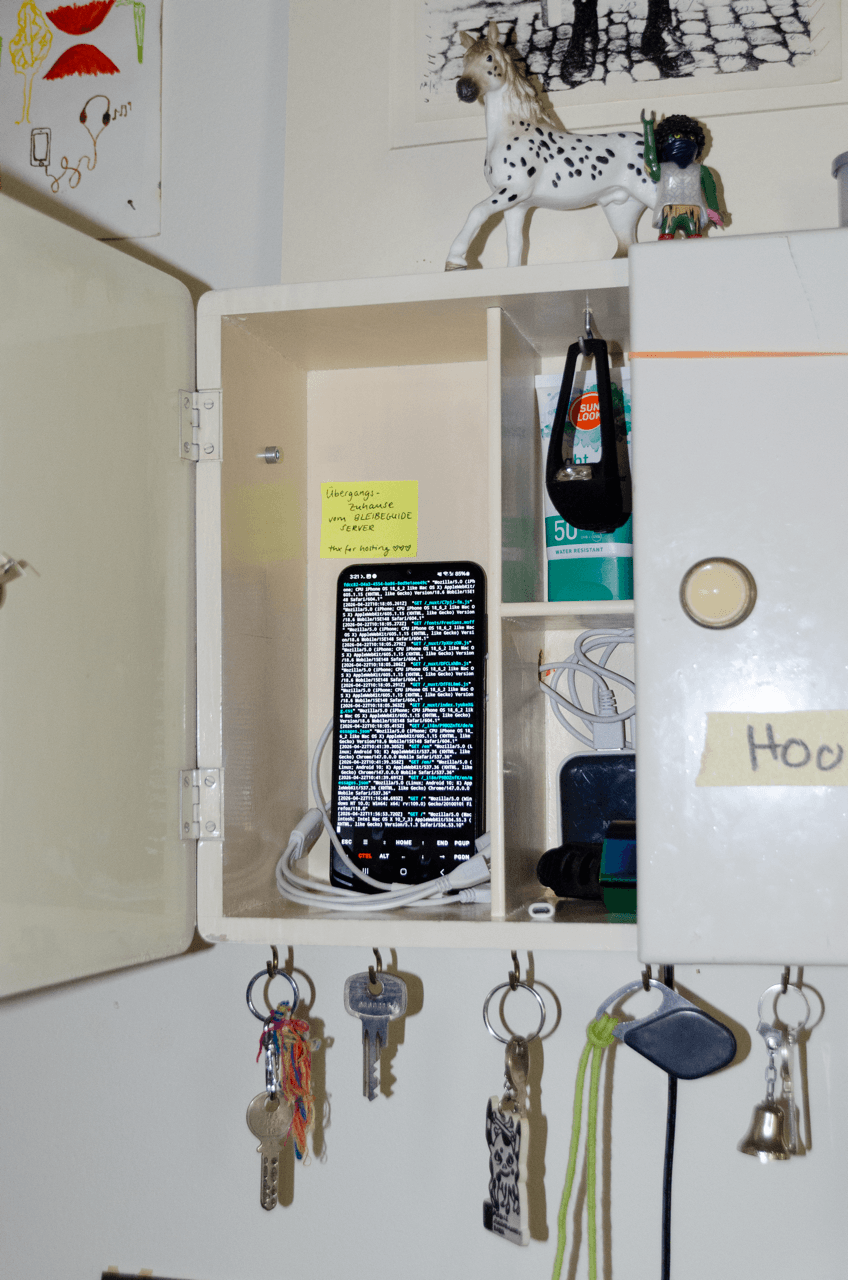
Starting from the inadequacies of global digital infrastructure and its predetermined options, roles and narratives of growth, this thesis asks how we can move past complaint towards the making of irresistible infrastructure. It is structured through three practice-based action-research cycles: building a web server from an old phone, writing a glossary based on conversations with collectives that make and maintain their own digital infrastructure, and repairing, maintaining and hosting the Bleibeguide, an existing digital collection in Basel. Through these encounters and actions, the thesis argues that irresistible infrastructure emerge as meso-scale projects that centre the quality of their relations and are aligned with and directed towards a purpose. The thesis offers a working definition of irresistible infrastructure that is grounded in the relation between intimacy, materiality and scale and proposes this as a means of practising and building digital systems that allow for meaningful interaction and exchange.
2 Introduction
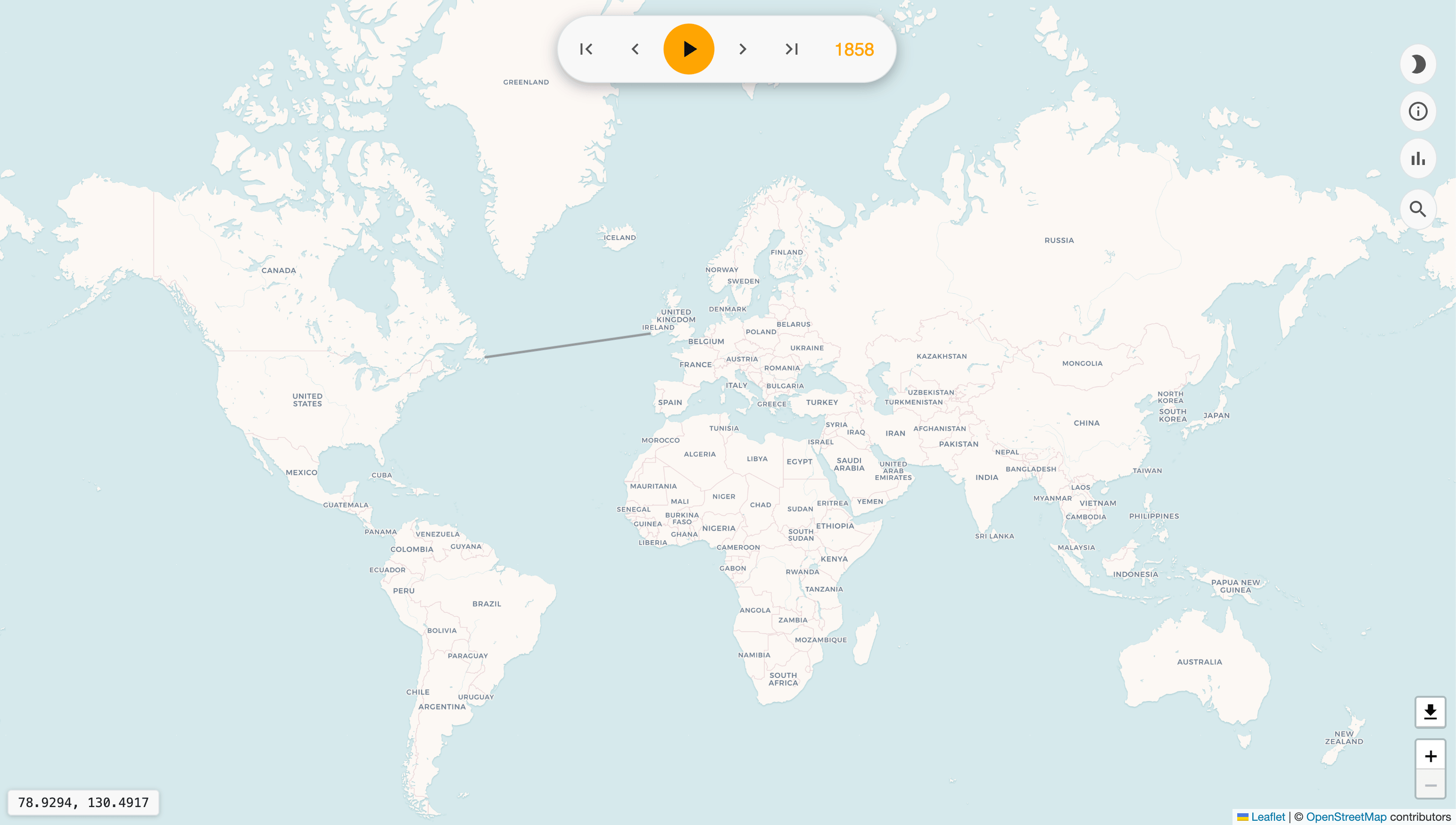
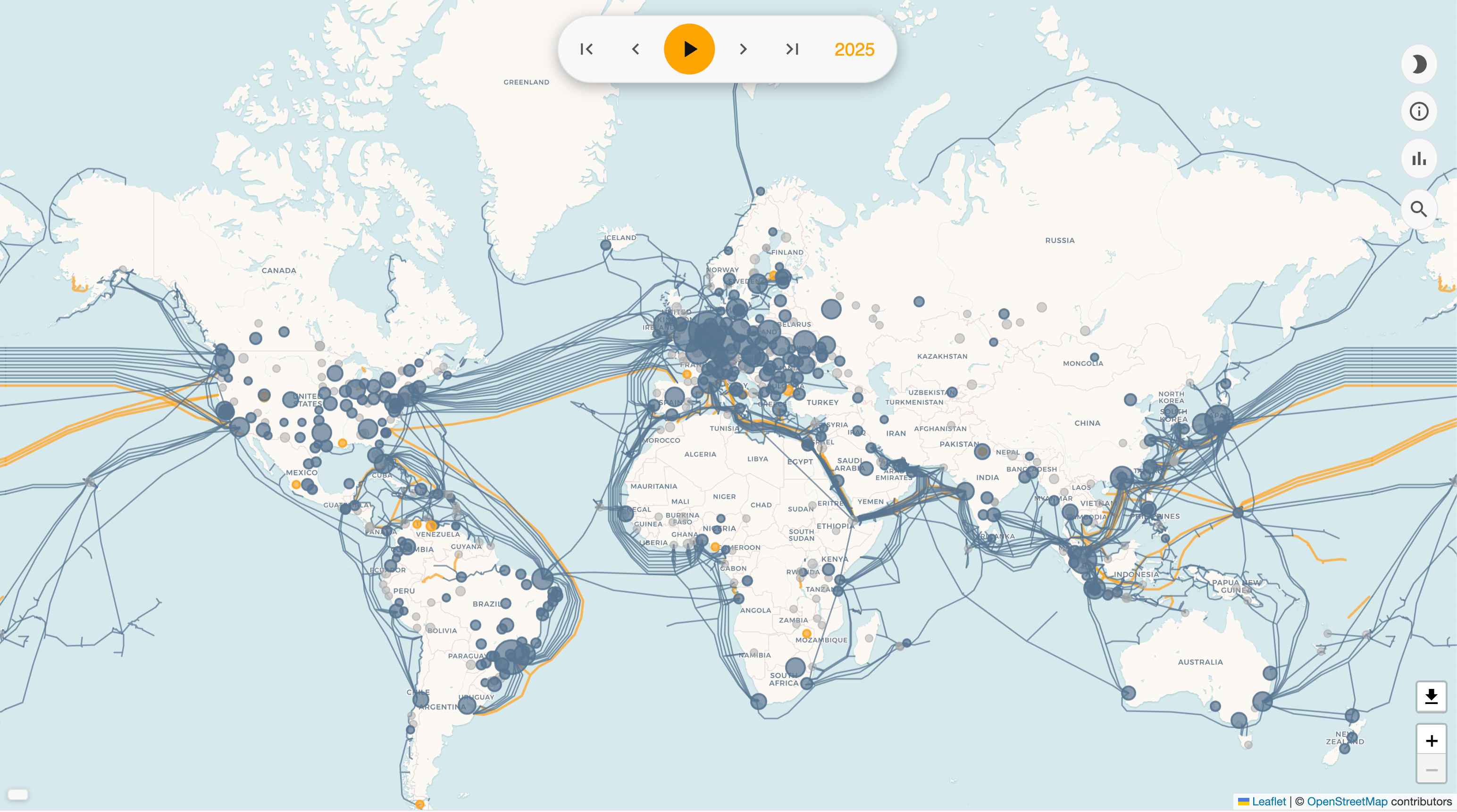
In 1858, the first transatlantic cable was laid on the bottom of the Atlantic Ocean, connecting Canada and Ireland and laying the foundation of what would become the global internet as we know it. To protect the cable from the conditions at the bottom of the sea, it was covered in a latex casing. This latex was extracted from the gutta-percha tree. A fully grown tree yields a few hundred grams of this material, which remains durable, flexible and waterproof in ocean water (Crofton 2022). To obtain enough of the material needed to encase this first cable, almost a million gutta-percha trees were felled in Malaysia and Singapore. The cable broke after only three weeks, and many years, kilometres of cables and attempts were necessary to secure a connection that would actually function for longer stretches of time. Over the course of these first decades of transatlantic telegraph cable-laying, the gutta-percha tree became at risk of extinction. (Crawford 2021, 47)
The material problems of the first submarine cables were mainly ones of insulation and protection. British-owned companies extracted and manufactured the gutta-percha latex at scale to insulate cables in a way that their data would not be conducted out into the ocean water. This monopoly meant that they made the decisions on the first transcontinental cable connections and, as a result, spent the first decades laying cables to their colonies, in an attempt to strengthen their power overseas (Starosielski 2015, 32-33). The devastating impact of extraction for cables, resulting in deforestation and biodiversity loss, is shocking, yet fits seamlessly into the way decisions and developments for global technological infrastructure happen today. The story of these cables relates directly to the talk Liu Ting-Chun gave in Offenbach in 2025, mapping out the power structures behind the manufacturing of the Nvidia A100 GPU. Liu highlights how each production step is dominated by a highly extractive and environmentally damaging corporate monopoly. The silicon wafers that form the base on which the circuits of the graphics card are printed are produced almost exclusively in Taiwan, the global need for them forming the so-called “silicon shield” that is a protection of Taiwan’s autonomy from China (Šimov 2025).
In many ways, observing the acceleration and hype of generative AI has felt like observing a new order of magnitude in global hardware being built, bought, speculated on, monopolised and fought over. Compared to this, the early stages of the internet are often described as a decentralised, open, unregulated infrastructure. Yet, even the initial steps towards the global internet system through this first transatlantic cable were already a site of environmental disaster, extraction and colonial surveillance technology. In both cases, the decisions are made by major global companies, which not only control and determine the conditions, features and connectivity but also, to a certain extent, the narrative around the infrastructure.
Despite their materiality, computational infrastructure is continually obfuscated behind bodiless metaphors and seamless user experiences. Server centres and services seem intangible and abstract, the location and the use of resources and materials are hidden. We can barely tell when processes are running on our phone or laptop and when the computation or storage is outsourced to a server centre halfway around the world. This causes all applications to feel equally weightless, regardless of their actual load. The rise of generative AI is accompanied by media coverage of GPU shortages and discussions about European sovereignty from US tech monopolies and their servers. Conversations about hardware have once again made their way into the mainstream media, as well as into more and more other communities and fields, including design. As these computationally intensive algorithms become more widely used and discussed, the concept of immateriality becomes increasingly difficult to maintain. To us as users, technological developments such as generative AI seem beyond our influence. They are often added to our tools without our approval and confront us with the binary options of use or non-use. Involving these systems in our workflows, we become even more reliant on heavy computational infrastructure and the convenience of outsourcing our computation and data.
Irresistible Infrastructure is a research project in the context of the MA Transversal Design at HGK Basel. The project emerged from my (the author’s) frustration as a designer regarding the manner in which global digital systems are made and narrated, and the ways designers are implicated in legitimising and aestheticising these systems. The research aims to move beyond complaints about the affective and material dependencies on big tech infrastructure and its resulting political power, examining existing practices for gaining agency and literacy, and for collectively creating tools and infrastructure.
In this thesis, these are referred to as irresistible infrastructure. The term was brought up during a conversation in our thesis mentoring pod, when my friend and colleague Olga pointed out that, when it comes to digital boycott, we focus on the things we no longer have access to rather than the new (irresistible) things we will encounter instead. As adrienne maree brown writes, “When it feels good, more people want to be part of it. [..] we need to be fomenting an irresistible space that everyone wants to move towards. It should feel like home; it should feel delicious; it should feel caring. It should feel like a community. That’s also a design piece.” (brown n.d.) With this in mind, this research asks: What is irresistible infrastructure and how can we move towards it?
2.1 Context and method
I start with my background and network as a designer and (self-taught) programmer. While these fields often rely on and encourage high computational practices, for this project I specifically turn to practitioners and communities that apply trans*feminist and eco-responsible approaches to technology and computation. Approaches that view limitation as a source of inspiration rather than an obstacle to overcome. The projects and collectives I refer to are often from and build on, but also extend and transverse art, design, ICT and programming. I especially, but not exclusively, look at projects connected to the terms practices, feminist hacking, and computing with/in limits. I then expand to other contexts and thinkers for perspectives on strategies for collectivity and organising, emergence, intimacy, smallness and non-scalability. They inform both the affective qualities of the infrastructure and practices I am describing and its potential impact.
I conducted three action-research cycles that each consist of hands-on examination through making, in exchange or in direct collaboration with other people. These cycles of action and reflection inform each other, and are additionally informed by conversations and readings. In this sense, I treat the method itself as a designerly form of action research, shaped through cycles of action and reflection in participation with others (Silverman 2015, 716-717). An action consists of three phases, which are reflected in the structure of the following text.
Planning
Identifying an interest and gathering information, in the thesis: introducing the topic.
Acting
Developing the action and practising it, in the thesis: documenting and describing the action.
Reflecting
Being in conversation/sharing back, reflecting on the process, in the thesis: reflections.
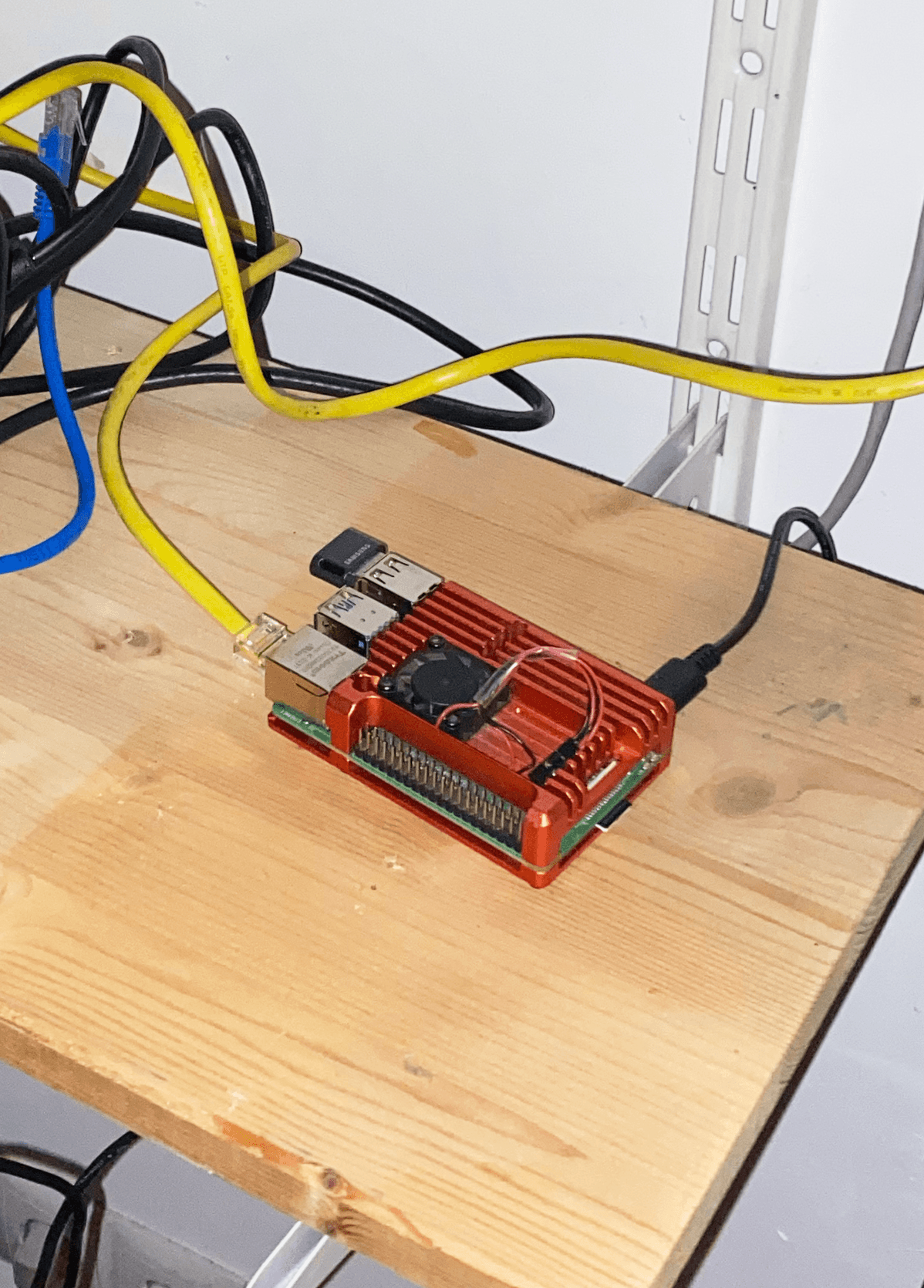
The first action took place from September to November 2025 and involved making a solar-powered server using an old smartphone, as well as using it as a web server for my democrit (mid-way presentation) in March. The second action was visiting collectives in Berlin, Rotterdam, Basel, Mainz and Freiburg and making the glossary, which took place from November to February, with further visits and conversations extending until June. The third action was remaking and hosting the Bleibeguide website together with my friend and colleague Luca, which took place from February to April. The rest of the time was spent putting my reflections into writing and making the thesis website.
2.2 Scale and interdependency
The projects, infrastructure and communities I look at and engage with are meso-scale, meaning they bridge individual practice (micro) and global systemic structure (macro). As adrienne maree brown states, “When we speak of systemic change, we need to be fractal. Fractals – a way to speak of the patterns we see – move from the micro to macro level.” (brown 2017, 59). The projects that work on digital infrastructure in small communities or on small scales can be especially radical in their proposals and actions. They often don’t aim to “scale up” to compete as global alternatives but rather, if at all, scale horizontally, in ideas and tools being shared and repurposed specific to each context. As Anna Lowenhaupt Tsing states, “Scalability requires that project elements be oblivious to the indeterminacies of encounter; that’s how they allow smooth expansion. Thus, too, scalability banishes meaningful diversity, that is, diversity that might change things. [...] It is time to turn attention to the nonscalable, not only as objects for description but also as incitements to theory.” (2015, 38).
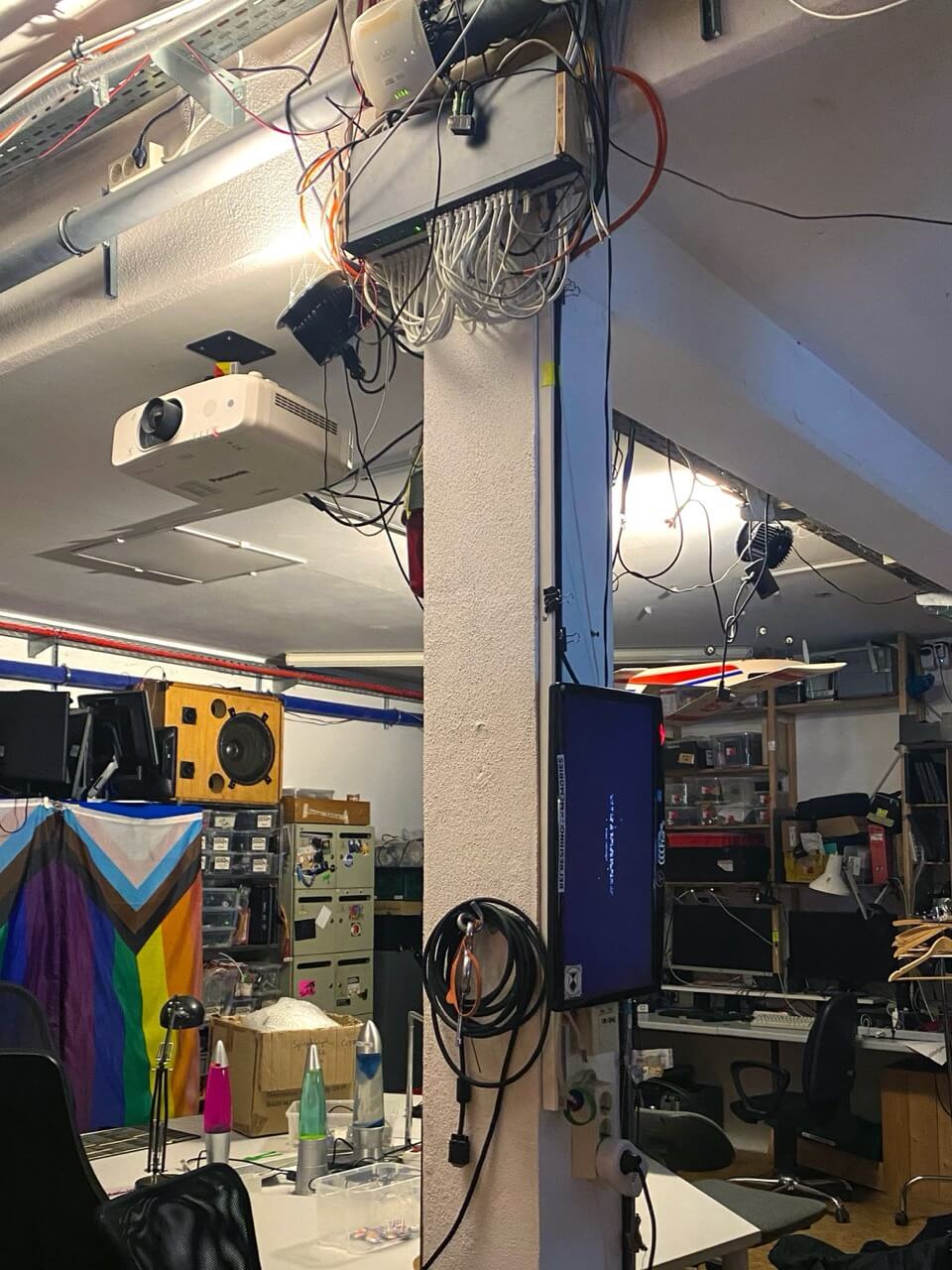
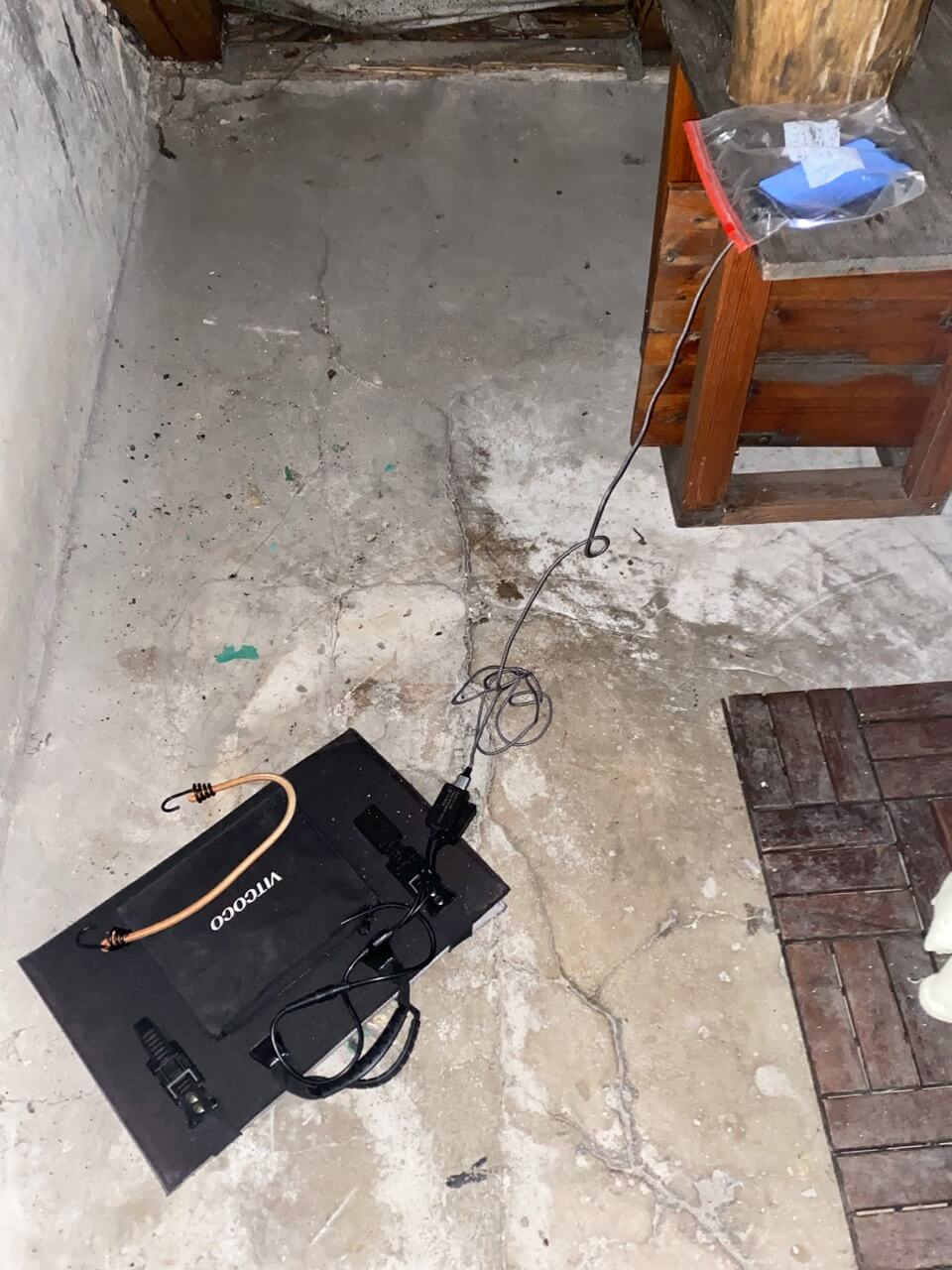
Not scaling vertically can also mean relying on each other and growing through interdependent networks and alliances, as shown by the TITiPI 1 interdependent infrastructure map, which maps a web of mutual support where each collective hosts few services to share amongst each other, rather than each hosting everything they need. In this view, scale is not about reaching more users or increasing capacity, but about the depth and density of relations between contexts. To start building on my web of interdependency, this thesis website is hosted on compost.party, a collective I met in November that provides web hosting on a solar-powered smartphone server on a roof in Berlin. Being connected to a solar panel, it can occasionally be unavailable. (Read more about compost.party in Action 2)
2.3 Materiality, scale and intimacy in irresistible infrastructure
This research engages with transversal relationality across different projects, collectives and infrastructure. I am specifically interested in the relation between materiality, scale and intimacy. Materiality refers to the material conditions and local/global implications of hardware, as introduced in the story of the first transatlantic cable. Scale refers to growing interdependent networks as described in the paragraph above. I refer to intimacy as a practice of world-making, as described by Lauren Berlant. Asking in server practices and the making of digital systems, “what other spaces of enjoyment and relationality can we imagine, and how can we build on those attachments and patterns in order to create a world of curiosity and play that is more meaningful than the one we are living in now” (Berlant n.d.). My understanding of irresistibility is informed by adrienne maree brown, for whom transformation happens through relation, repetition and scale (brown 2017). I approach server practices as infrastructure because they are not only technical systems, but ongoing arrangements of maintenance, labour, care, access and dependence. In this thesis, I look at how intimacy and materiality shape whether the infrastructure is used, sustained and meaningful, and how scale affects what kinds of relations they can support. Through the three action-research cycles, I gradually develop a working definition of irresistible infrastructure.
1: “The Institute for Technology in the Public Interest (TITiPI) is a trans-practice gathering of activists, artists, engineers and theorists initiated by Miriyam Aouragh, Seda Gürses, Helen Pritchard and Femke Snelting. We convene communities to articulate, activate and re-imagine together what computational technologies in the “public interest” might be when “public interest” is always in-the-making" (TITiPI n.d.)
.jpeg)